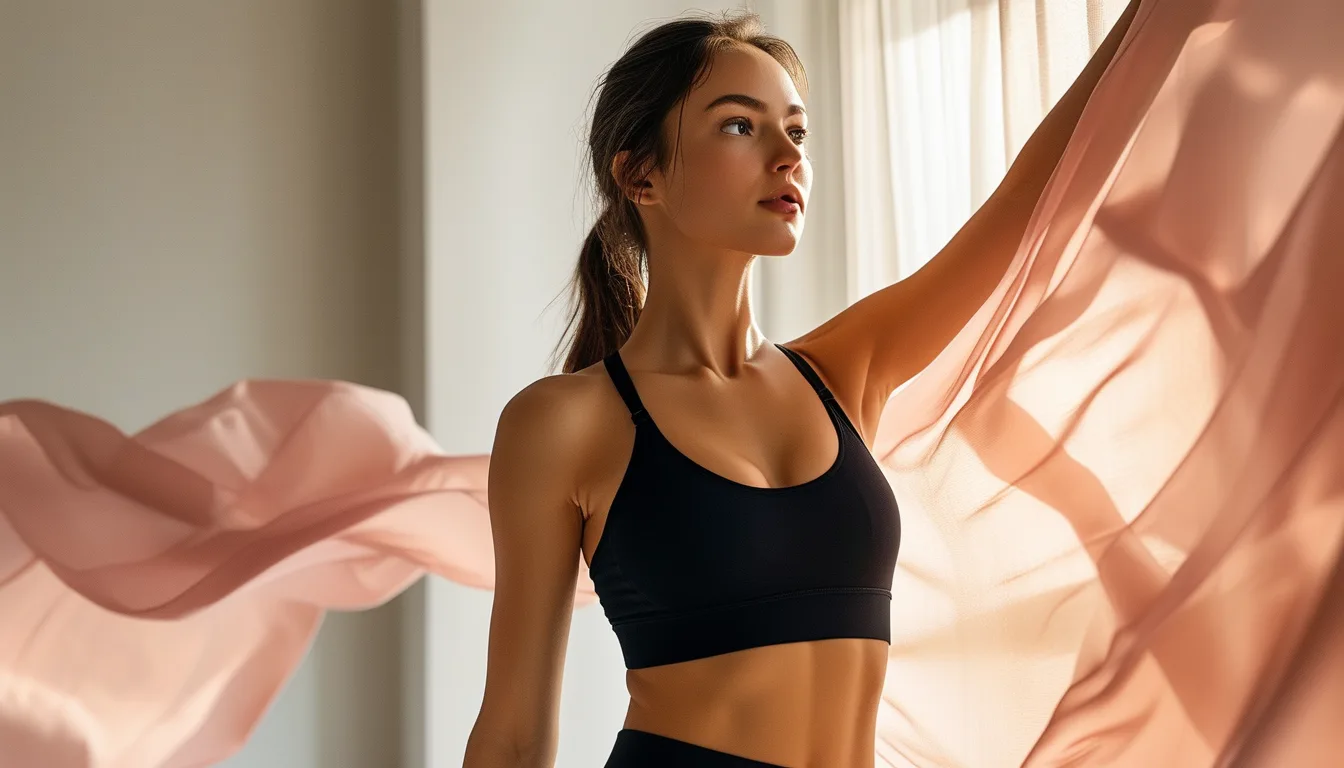
Why the Second Skin Effect Disappears Under Any Layer
Quick Answer: The second-skin sensation comes from the legging moving with your skin rather than against it. Any layer that rests on the legging adds friction and downward drag, which reintroduces the awareness of wearing something. Layers that hang free from the shoulders preserve the effect; layers that sit on the hips destroy it.
You bought them because they disappear.
It is autumn, you have started wearing something over them, and they have stopped disappearing.
The legging is doing exactly what it did in August. Something above it changed the conditions it was designed for.
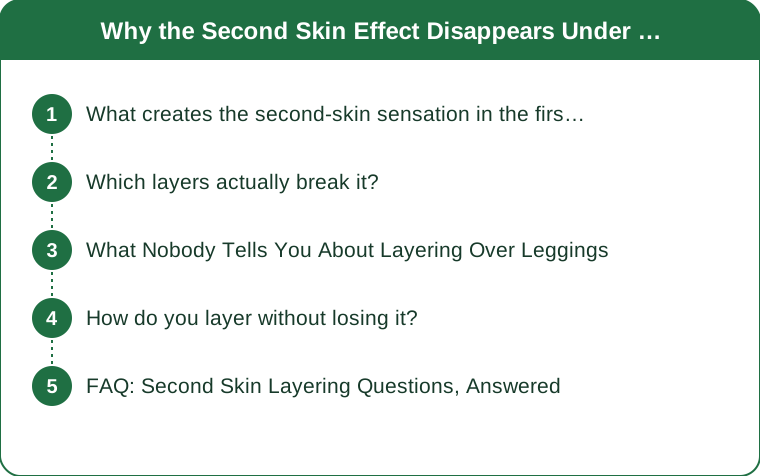
What creates the second-skin sensation in the first place?
It is not softness, which is what most people assume and what most marketing implies.
The sensation comes from the fabric matching your skin’s movement. When you bend a knee, your skin stretches by a measurable amount over the patella, and a legging that stretches by the same amount at the same rate produces no relative motion between fabric and skin. No relative motion means no sensation, and no sensation is what people describe as feeling like nothing.
This requires three properties together: high elastane content for stretch, a knit that stretches in all directions rather than mainly one, and — critically — enough grip that the fabric does not slide independently of the skin.
That last property is the one layering interferes with. A legging needs to stay in place relative to your skin. Anything that pulls it downward or drags across it produces exactly the relative motion the design eliminates.
Which is why the same legging is unnoticeable under a cropped top and very noticeable under a long tunic.
Which layers actually break it?
The determining factor is where the layer’s weight is carried.
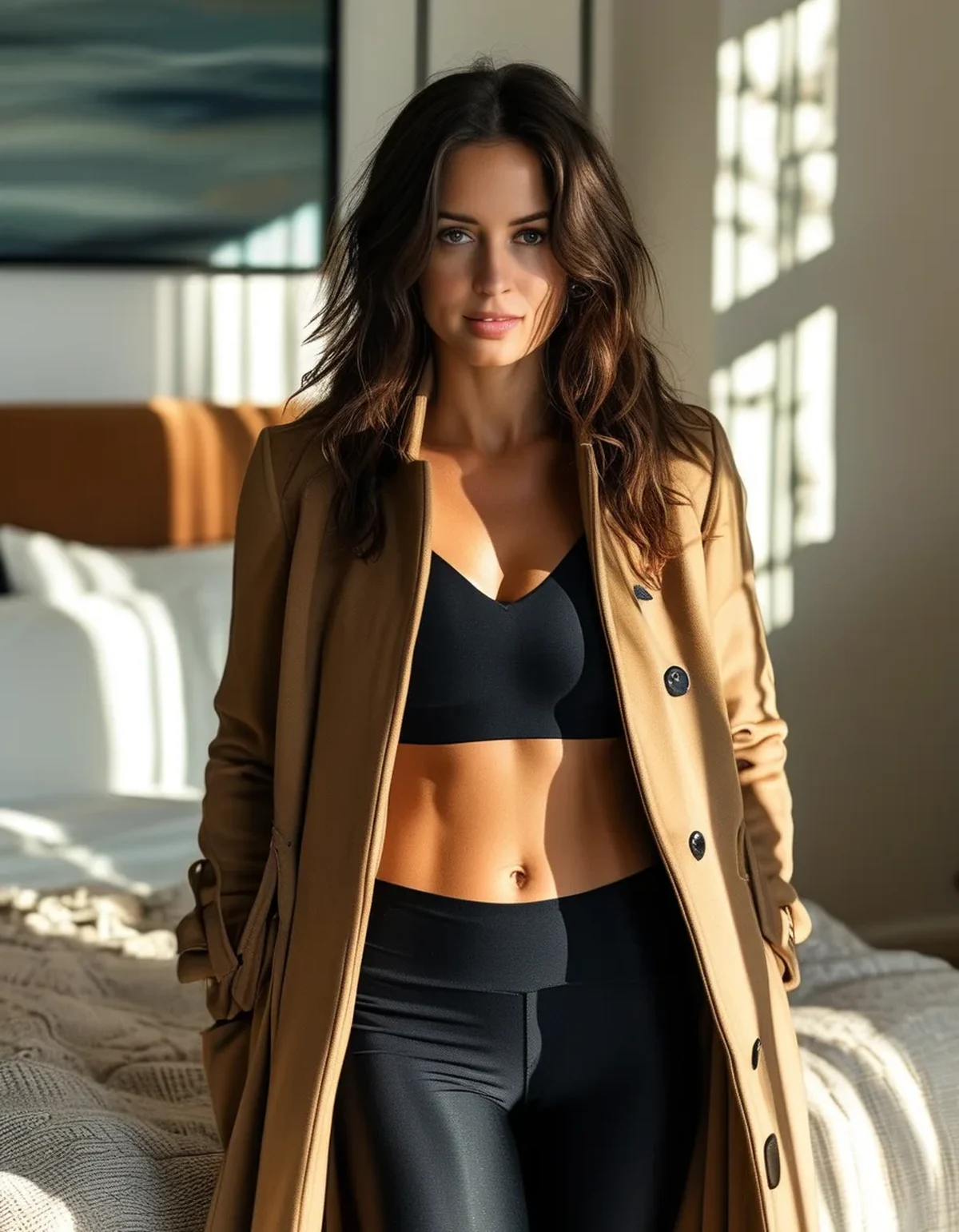
Layers that hang from the shoulders and do not contact the legging — an open cardigan, a jacket, a top that ends above the hip — are neutral. They do not touch the legging in a way that transmits force, and the effect survives intact.
Layers that rest on the hips are the problem. A long tunic, an oversized sweater that sits on the hip, or a dress worn over leggings carries part of its weight on the legging’s waistband and upper thigh. That downward force pulls the legging fractionally down over the course of a day, and each small slip is a moment of relative motion between fabric and skin.
Heavier and grippier fabrics are worse. A wool tunic drags substantially more than a smooth jersey one, which is why the same styling works in one fabric and fails in another.
And anything with a belt is the worst case, because it converts the layer’s weight into concentrated downward pressure at exactly the point where the legging’s waistband is doing its work.

What Nobody Tells You About Layering Over Leggings
The waistband height changes what you can layer over. A high-rise legging with a wide waistband distributes the drag of an overlayer across a larger area and resists it far better than a mid-rise pair. If you layer regularly, high-rise is not a style preference — it is the functional choice.
Second, static is doing more damage than you think. In dry autumn air, a synthetic overlayer clings to a synthetic legging, and that cling is friction that becomes drag with every step. A cotton or wool overlayer instead of a polyester one measurably reduces this, and so does treating the static directly.
Third: the fabric you wear underneath the legging matters if you wear anything at all. Seamless underwear with no elastic edges preserves the effect; anything with a defined elastic band under a fitted legging creates a pressure line that becomes the thing you notice.
And the observation that reframes the whole problem — the effect degrades over the course of a day rather than immediately. If your leggings feel perfect at 9 a.m. and noticeable by 2 p.m., that is drag accumulating, not the legging being wrong. It is diagnostic, and it points directly at whatever is sitting on your hips.
How do you layer without losing it?
Choose layers that end above the hip or well below it, and avoid the middle.
Above the hip: cropped jackets, waist-length knits, tucked or half-tucked tops. Nothing touches the legging.
Well below: a full-length open cardigan or coat that hangs from the shoulders. Even though it passes the hip, an open layer does not rest on it, so no weight transfers.
The middle range — hip-length to mid-thigh, worn closed — is where the effect dies. This is unfortunately the exact range that dominates autumn tunics and oversized sweaters.
If you want to wear something in that range, two things help substantially. Choose a smooth-faced fabric rather than a textured one, which reduces friction directly. And pick a high-rise legging with a wide bonded waistband, which resists the downward drag far better than a thin elastic one.
For genuinely cold days, layering under rather than over is the better answer. Thin thermal tights beneath the legging preserve the second-skin relationship entirely, because the interface with your skin is now a smooth thermal layer moving with you rather than a tunic dragging on the outside.
FAQ: Second Skin Layering Questions, Answered
Does sizing up help with the drag problem?
No, it makes it worse. A looser legging has less grip on the skin, which means more relative motion under the same drag. Fit is what resists the pulling.
Why does it feel worse after washing?
Usually residual detergent or softener reducing the fabric’s grip against skin. Rinse thoroughly, skip softener entirely, and the grip returns after a wash or two.
Are thicker fall leggings still second-skin?
They can be, but the effect depends on stretch matching rather than thickness. A thick legging with high elastane and four-way stretch feels closer to second-skin than a thin one with poor recovery.
TL;DR:
- The second-skin effect comes from the legging moving with your skin, not from softness.
- Layers that rest on the hips drag the legging downward and reintroduce the sensation; layers that hang from the shoulders do not.
- Avoid the hip-to-mid-thigh closed layer, or offset it with a high-rise wide waistband and a smooth-faced fabric.
- For cold days, layer underneath with thin thermals rather than over the top.
Nothing went wrong with the leggings. Autumn simply introduced a category of garment that works against the one property the whole design depends on — and once you know it is about where the weight sits, the styling fix is straightforward.
See It in Motion
Seen here: Super High Waist Embossed Yoga Leggings with Inner Pocket — shop it on bubblelime.com
Keep Reading
This article is for general informational and styling purposes only. Fit, sizing, and product availability may vary.