How Compression Level and Second-Skin Feel Are Not the Same Thing
Quick Answer: Second-skin feel comes from three things that have nothing to do with compression: a low-friction inner surface, fabric that recovers instantly rather than gradually, and a knit fine enough that you cannot feel individual yarns. Compression is about the pressure the garment exerts inward. A high-compression legging with a slightly rough inner face feels like a garment; a moderate-compression one with a brushed, slippery inner face feels like skin. Buy for the inner surface if second-skin feel is what you want.
The marketing conflates these two things constantly, which is why people buy tighter and tighter leggings looking for a feel that has nothing to do with tightness.
This blog has covered what makes a legging feel like a second skin, the second-skin feel versus breathability tradeoff, why they feel different on bare legs than over tights, and why they feel looser after twenty minutes. This is the distinction that explains all four.

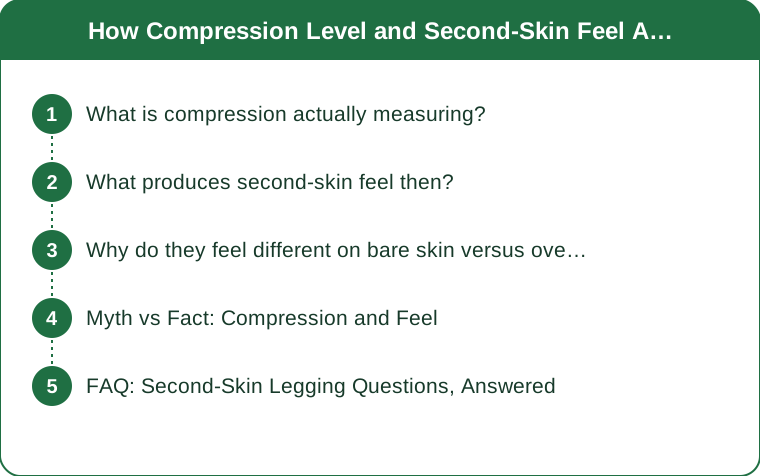
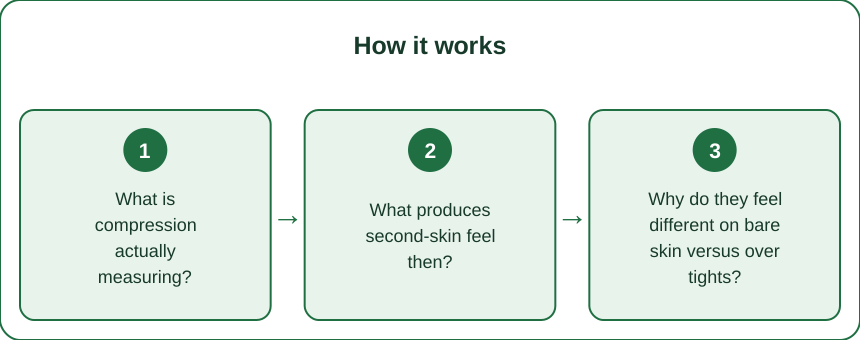
What is compression actually measuring?
The inward pressure the fabric exerts on your body, and it is a genuinely separate property from feel.
Compression is a function of fabric stretch resistance and how much the garment is stretched. A fabric with high resistance, cut smaller than your body, produces high compression.
Graduated medical compression is measured in millimetres of mercury. Activewear almost never publishes a number, which means compression claims in this market are essentially descriptive rather than measured.
Higher compression is not more supportive of anything in particular for general training. The evidence for performance benefit from compression wear is mixed at best, and most of the reported benefit is in perceived comfort and reduced muscle oscillation rather than in output.
What high compression reliably does is hold shape and stay put. For high-impact activity that is genuinely useful. For a walk or a yoga class it is largely irrelevant.
And high compression can actively work against second-skin feel. More pressure means more awareness of the garment, which is the opposite of the sensation people are describing when they say a legging disappears.
So the two properties can point in opposite directions, which is exactly why buying tighter has not produced the feel you wanted.
What produces second-skin feel then?
Three properties of the fabric surface and structure, in roughly this order of importance.
The inner face friction is the dominant variable. A brushed, peached, or silky inner surface slides against your skin rather than gripping it. That absence of drag is most of what people mean by second skin.
Recovery speed matters enormously. Fabric that returns to shape instantly after stretch moves with you; fabric that recovers slowly is momentarily loose after every movement, and that intermittent looseness registers as garment rather than skin.
Knit fineness determines whether you can feel the structure. A fine-gauge knit presents a continuous surface. A coarser one presents individual yarns you can perceive, particularly on sensitive skin areas.
Weight is a secondary factor. Very light fabrics feel less present but often sacrifice opacity and recovery. There is a sweet spot around 250 to 300 grams per square metre where you get substance and disappearance together.
Seam construction contributes. Any seam you can feel breaks the illusion completely, which is a large part of why seamless and bonded-seam constructions dominate this category.
And the waistband is disproportionately important. A waistband you are aware of ruins the effect regardless of how good the legs feel, because it is the point of highest pressure and highest movement.
Nylon-rich blends generally do this better than polyester-rich ones. Nylon fibres are smoother and produce a softer hand, which is why the premium end of this market is overwhelmingly nylon-elastane.
Why do they feel different on bare skin versus over tights?
Because the friction interaction changes entirely when you introduce a second fabric layer.
Skin-to-fabric friction depends on skin moisture, temperature, and texture. A brushed inner face that slides beautifully against dry skin behaves differently against slightly damp skin, which is why the same leggings feel different at the end of a workout.
Fabric-to-fabric friction is a completely different interaction. Two synthetic surfaces against each other tend to slip more, which is why leggings over tights ride and shift in ways they never do on bare legs.
Body heat transfer changes the perception too. Direct contact with skin means the fabric quickly reaches body temperature and stops registering as a separate thing. A layer in between delays that, and a garment at a different temperature from your skin stays perceptible.
Moisture in between changes everything. Sweat trapped between two layers creates a slippery film that eliminates the grip a legging relies on to stay in place.
This is also why they feel looser after twenty minutes. Elastane warms, softens slightly, and relaxes as it reaches body temperature, and the garment settles into its worn shape. This is normal, expected, and reverses when it cools.
Practical conclusion: judge a legging on bare skin, warm, after twenty minutes. That is the condition you will actually wear it in, and it is not the condition of a two-minute fitting room test.
Myth vs Fact: Compression and Feel
Myth: Tighter leggings feel more like a second skin. Fact: Past a point, more pressure means more awareness of the garment. Second-skin feel comes from low inner-face friction and instant recovery, not from tightness.
Myth: Compression wear improves performance. Fact: Evidence for performance benefit is mixed and generally small. The more consistent findings are reduced muscle oscillation and improved perceived comfort, which are real but different claims.
Myth: Heavier fabric always means better quality. Fact: Weight correlates with opacity and durability, not with feel. Some of the best-feeling fabrics sit in the middle of the weight range, and very heavy fabrics frequently feel like garments rather than skin.
Myth: A legging that feels amazing in the shop will feel amazing all day. Fact: Fabric warms, elastane relaxes, and skin becomes damp. All three change the interaction. Twenty minutes of wear is the honest test.
Myth: Polyester and nylon are interchangeable. Fact: Nylon fibres are smoother and softer to the hand, and nylon-rich blends dominate the premium end of this market for exactly that reason. Polyester dries faster and costs less.
Myth: Seamless always feels better. Fact: Seamless removes seams, which helps. But a seamless legging with a coarse knit or a grippy inner face feels worse than a bonded-seam one with an excellent inner surface. The surface matters more than the construction method.
FAQ: Second-Skin Legging Questions, Answered
What makes leggings feel like a second skin?
A low-friction brushed or silky inner face, fabric that recovers instantly after stretch, and a fine enough knit that you cannot feel individual yarns. Compression level is a separate property and higher compression often works against the effect.
Is high compression better in leggings?
Only for high-impact activity, where holding shape and reducing muscle oscillation matter. For lower-impact training it adds awareness of the garment without much benefit, which is the opposite of second-skin feel.
Why do my leggings feel looser after twenty minutes?
Elastane warms to body temperature, softens slightly, and relaxes into the shape you are holding. This is normal and reverses when the garment cools. Judge fit after twenty minutes of wear, not in a two-minute fitting room test.
TL;DR:
- Compression is inward pressure; second-skin feel is low inner-face friction plus instant recovery plus fine knit. They are separate properties.
- Buying tighter to get a better feel works against you past a point, because more pressure means more awareness.
- Nylon-rich blends feel softer than polyester-rich ones, and the sweet spot for weight is roughly 250 to 300 gsm.
- The waistband disproportionately determines the whole effect. If you can feel it, nothing else matters.
Judge leggings on bare skin after twenty minutes of wear. Warm, settled fabric is the condition you actually live in.
See It in Motion
Seen here: Super High Waist Embossed Yoga Leggings with Inner Pocket — shop it on bubblelime.com
Keep Reading
This article is for general informational and styling purposes only. Fit, sizing, and product availability may vary.