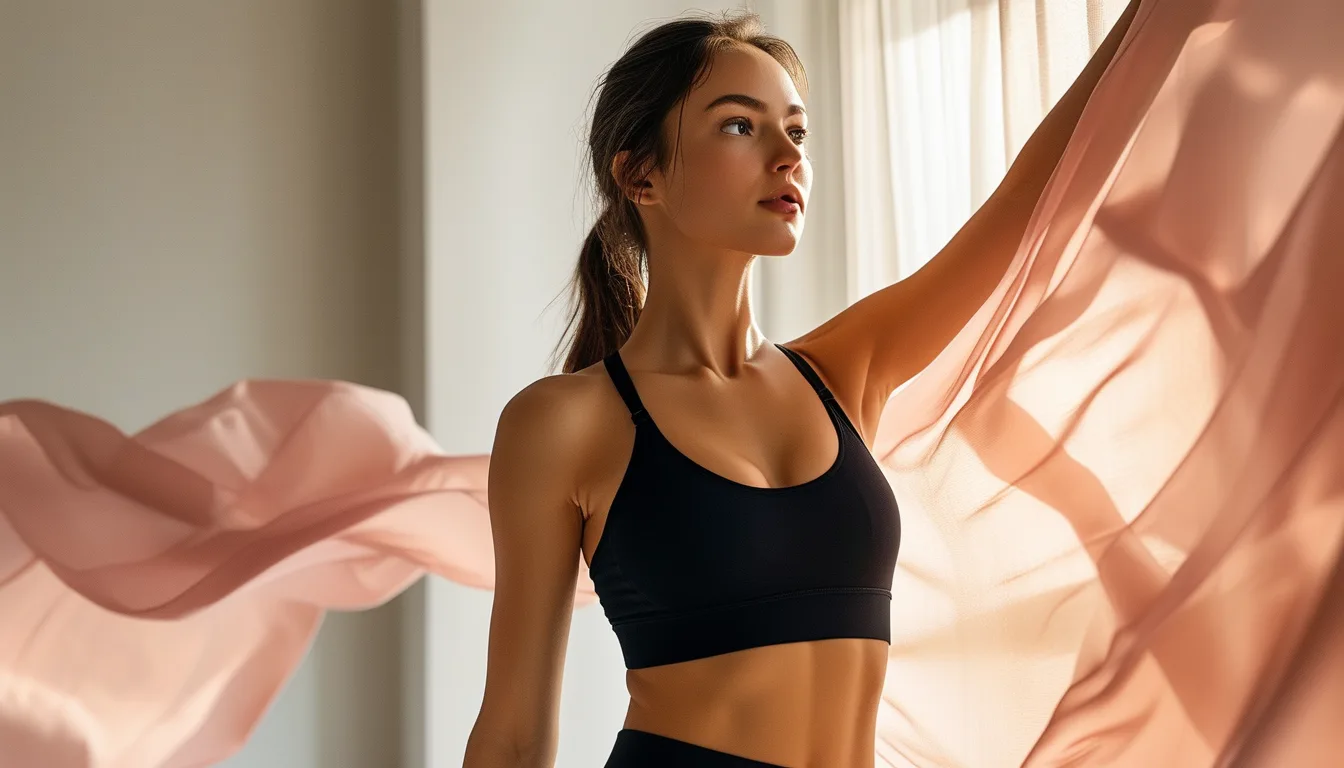
What Makes a Legging Feel Like a Second Skin (The Fabric Breakdown)
Quick Answer: The “second skin” feeling comes from four specific, measurable fabric properties working together: four-way stretch with at least 25% spandex content, a lightweight knit (typically under 220 grams per square meter), flat-lock or bonded seams that eliminate raised friction points, and a moisture-wicking finish that keeps fabric from clinging or feeling damp against skin. Remove any one of these and the fabric stops feeling like an extension of your body and starts feeling like clothing.
There’s a specific moment you notice it — you bend down, sit cross-legged, or reach overhead and realize you completely forgot you were wearing leggings. That’s not a vague marketing feeling. It’s the result of a fabric and construction spec sheet doing its job correctly, and you can actually check for these things before you buy.

What Does “Four-Way Stretch” Actually Mean, and Why Does the Percentage Matter?
Four-way stretch means the fabric stretches and recovers along both its horizontal grain (widthwise) and vertical grain (lengthwise), as opposed to two-way stretch fabric, which typically only stretches in one direction. This matters enormously for a “second skin” feel because your body moves in more than one direction at once — a lunge stretches fabric lengthwise down the thigh and widthwise across the hip simultaneously. Two-way stretch fabric can’t accommodate both at once, so it either restricts movement or bunches.
But the direction of stretch is only half the story — the percentage of stretch is what determines how closely fabric tracks your body. This comes down to spandex (also called elastane or Lycra) content in the fabric blend. A fabric with 8-12% spandex has noticeable stretch but a fairly firm hand-feel; it moves with you but doesn’t hug closely. Fabric in the 25-30% spandex range is where the “second skin” sensation actually shows up — the higher elastane ratio lets the fabric compress and rebound almost instantly, tracking body contours in real time rather than lagging behind the movement.
The tradeoff: higher spandex content generally costs more and can reduce breathability slightly if not blended correctly, which is why the base fiber (usually nylon or polyester) matters just as much as the spandex percentage — a nylon-spandex blend in that 25%+ range typically balances closeness with breathability better than a cheaper polyester-spandex blend at the same ratio.
Does Thinner Fabric Always Mean a Better “Second Skin” Feel?
Mostly yes, but with an important tradeoff. Fabric weight is measured in grams per square meter (gsm) — lower numbers mean thinner, lighter fabric. Leggings marketed for a barely-there feel typically fall in the 180-220 gsm range, compared to 260-320+ gsm for heavier compression or cold-weather leggings. Thinner fabric has less mass sitting on your skin, which is a large part of why it registers as “not really there.”
The tradeoff is durability and opacity. Fabric under roughly 180 gsm often can’t achieve full opacity without a lot of spandex or a tight knit structure, which means very light fabric can go sheer during a deep squat if the knit density isn’t high enough to compensate — this is the single most common complaint about ultra-lightweight leggings. It’s also more prone to pilling and thinning at high-friction zones (inner thighs, behind the knees) over repeated wear compared to a heavier weight fabric.
The best “second skin” fabrics solve this with knit density rather than just going thinner — a tightly-knit, low-gsm fabric can be both lightweight and opaque, because the fibers are packed closely even though the overall fabric is thin. When shopping, a genuine squat-test description in reviews (not just marketing copy) is one of the more reliable signals that a lightweight fabric has the knit density to stay opaque, since gsm alone doesn’t guarantee it.

What Nobody Tells You About Seams and the “Barely There” Feeling
Most people assume fabric alone determines how a legging feels against skin, but seam construction is often the bigger factor — and it’s the one detail most shoppers never check before buying.
A standard sewn seam creates a raised ridge where two fabric edges are stitched together, which sits proud of the fabric surface. Every time that ridge crosses a point of friction — the inner thigh, behind the knee, along the waistband — it creates a tactile interruption you feel with every step, even if the fabric itself is soft. Over a run or a long day, that ridge is often the actual source of the “I can feel these leggings” sensation, not the fabric.
Flat-lock seams solve this by overlapping the fabric edges and stitching them flat against each other rather than folding them into a ridge, so the seam sits nearly level with the surrounding fabric. Bonded (or “welded”) seams go a step further, using heat and pressure to fuse fabric edges without any thread at all, eliminating the ridge entirely along with any risk of thread chafing.
The placement matters as much as the type: a flat-lock or bonded seam along the inner thigh — the highest-friction zone during walking and running — makes a bigger difference to the “second skin” feeling than the same seam type used anywhere else on the garment. If you’re trying to evaluate a pair before buying, running a finger along the inner thigh seam in a product photo or in-store is one of the most reliable individual checks you can do.
Myth vs Fact: Does Moisture-Wicking Fabric Actually Change How It Feels, or Just Performance?
Myth: Moisture-wicking is only about sweat performance, not the “second skin” feeling.
Fact: Moisture-wicking finishes directly affect how fabric feels against skin, independent of how much you’re actually sweating. Untreated synthetic fabric tends to hold surface moisture (even ambient humidity or light perspiration) in a thin film against the skin, which creates a slightly clammy, clingy sensation — fabric that sticks rather than glides. A wicking finish pulls that moisture through the fabric to the outer surface where it evaporates, keeping the inner layer against your skin drier. Dry fabric glides against skin; damp fabric drags and clings. That difference in glide is a large, underrated part of what separates “feels like skin” from “feels like clothing.”
Myth: Natural fibers like cotton blends give a softer, more second-skin feel than synthetic wicking fabric.
Fact: Cotton feels soft when dry, but it absorbs and retains moisture rather than wicking it away, so it becomes heavier, damper, and clingier the longer you wear it during activity. A well-engineered synthetic (nylon or polyester with a wicking treatment and high spandex content) will feel closer to weightless after 30 minutes of movement than a cotton-blend fabric, even though cotton might feel marginally softer in the first thirty seconds in a dressing room. The “second skin” feeling is really about how fabric performs over time and motion, not how it feels static in your hands.
FAQ: Second-Skin Legging Fabric Questions, Answered
What spandex percentage should I look for on a care label?
Aim for 20% or higher if you want a noticeably close, tracking fit; 25-30% is where most people describe the sensation as “barely there.” Below 15%, fabric will still stretch but tends to feel more like structured athletic wear than a second skin.
Is nylon or polyester better for a second-skin feel?
Nylon-spandex blends are generally softer and more silky against skin with better recovery over time, while polyester-spandex blends are typically more durable and hold color better but can feel slightly less smooth. For pure hand-feel, nylon blends more often get described as second-skin; for longevity, polyester blends often outlast them.
Why do my leggings feel great new but start feeling “there” after a few months?
This is almost always spandex breakdown — elastane fibers lose recovery with repeated stretching, heat exposure, and washing, so the fabric stops snapping back and starts feeling looser and heavier against skin. Washing in cold water and avoiding high heat drying significantly slows this breakdown.
Does a higher price always mean a better second-skin feel?
Not automatically, but price often correlates with two things that do matter: higher spandex percentage and better seam construction (flat-lock or bonded vs. standard stitching), both of which cost more to manufacture. Checking the actual fabric content and seam type on the product page is more reliable than price alone.
TL;DR:
- Four-way stretch with 25%+ spandex content lets fabric track your body’s movement in real time instead of lagging behind it.
- Lower fabric weight (180-220 gsm) reduces how much you feel the fabric, but needs tight knit density to stay opaque.
- Flat-lock or bonded seams — especially along the inner thigh — eliminate the raised ridges that are often the real source of “feeling” your leggings.
- Moisture-wicking finishes keep fabric dry and gliding rather than damp and clinging, which matters as much as the fabric’s static softness.
Second skin isn’t a texture — it’s four fabric specs working together, and you can check every one of them before you buy.
See It in Motion
Seen here: High Waist Yoga Leggings with Side Pockets — shop it on bubblelime.com
Keep Reading
This article is for general informational and styling purposes only. Fit, sizing, and product availability may vary.