Why Second-Skin Leggings Feel Tightest at the Ankle by Evening
Quick Answer: Your ankles are measurably larger in the evening than in the morning - typically 5 to 10% in circumference after a full day upright - because gravity moves fluid downward and it pools at the lowest point. The legging did not shrink; your ankle grew into it. Second-skin fabrics make this obvious because they sit at true skin tension with almost no slack to absorb the change, and the ankle cuff is usually the narrowest, most reinforced part of the whole garment.
Here is what is actually happening, and what to change about how you buy and wear them.

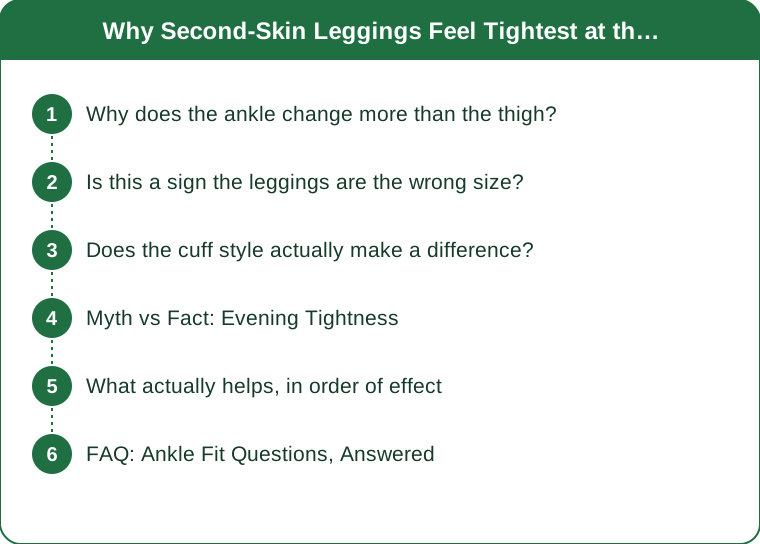
Why does the ankle change more than the thigh?
Fluid follows gravity, and your ankle is the bottom of the system. Over a day of standing, sitting, and walking, plasma moves out of your circulation into the surrounding tissue of your lower legs. It collects where it has furthest to travel back up - which is the ankle, not the thigh.
The thigh has muscle bulk that changes shape rather than volume. When your quads relax through the day, the thigh actually reads slightly softer, so the fabric there feels the same or easier. The ankle has almost no muscle to speak of - it is bone, tendon, and skin, so any fluid increase shows up directly as circumference.
The cuff is also the tightest-engineered part of the legging. Most second-skin styles finish the hem with a narrower band, extra stitching, or a slightly higher elastane concentration so the leg does not ride up. That is a feature at 8am and a pressure point at 8pm.
Sitting makes it worse than standing. A seated position with your knees bent at 90 degrees for hours compresses the back of the knee and slows return flow, which is why desk days often produce tighter evening ankles than active days do.
And heat amplifies all of it. Warm weather dilates surface blood vessels, increasing the fluid that moves into tissue. A late-August evening will read tighter than the same day in October at identical activity levels.
Is this a sign the leggings are the wrong size?
Usually not - and sizing down at the ankle is the wrong response. If the legging fits comfortably at the ankle in the morning and reads snug by evening, that is the normal daily range of your own body, not a fit error.
The genuine warning signs are different. Look for a visible indentation that stays for more than a few minutes after you take them off, numbness or pins and needles in the foot, or a cuff that leaves a red ring rather than a light mark. Those mean the cuff is compressing rather than holding.
A quick two-finger test settles it. In the evening, you should be able to slide two fingers flat under the cuff without dragging the fabric. If you cannot get one finger in, the cuff is too narrow for your end-of-day ankle - which is the measurement that matters, not your morning one.
Try leggings on in the afternoon if you can. Most people fit activewear on a weekend morning at their smallest, then wear it in the evening at their largest. That single scheduling change prevents more sizing regret than any size chart.
And do not confuse tightness with slipping. A cuff that feels tight but stays put is doing its job; a cuff that feels tight and migrates upward is too small and is being pushed off the narrowest point of the calf.
Does the cuff style actually make a difference?
Yes, and it is the single most useful thing to look at on the hanger. Three finishes dominate, and they behave completely differently through a day.
A folded or banded cuff - where the hem is turned and stitched into a defined band - grips hardest and changes least. It is the best at staying put and the worst at accommodating evening swelling. Good for running, less good for a twelve-hour day.
A raw-edge or laser-cut hem has no separate band at all; the fabric simply ends. These flex with your ankle because there is no reinforced ring to resist it, which is why they are the most forgiving option for long wear. The trade-off is slightly more ride-up during high-impact movement.
A tapered hem narrows gradually over the last few inches rather than ending in a band. This spreads the pressure over a wider area instead of concentrating it in one ring, and is the best compromise for most people.
Length interacts with all three. A full-length legging that ends exactly at the narrowest part of your ankle will feel tighter than a 7/8 that ends higher on the calf, even in identical fabric - because the ankle is where the fluid is. Moving up to a 7/8 or a 25-inch inseam solves the problem for a lot of people without changing size at all.

Myth vs Fact: Evening Tightness
Myth: your leggings shrank in the wash. Fact: if they were tight this evening and comfortable again tomorrow morning, nothing shrank. Genuine shrinkage does not reverse overnight. Real heat damage to elastane shows up as permanent loss of recovery - baggy knees, a slack waistband - not as a tighter cuff.
Myth: tighter at the ankle means better compression. Fact: true graduated compression is engineered to be strongest at the ankle and progressively looser upward, and it is specified in mmHg. A regular legging that happens to be tight at the ankle is not graduated compression - it is just a snug hem, and it can restrict return flow rather than assist it.
Myth: this only happens to people who are out of shape. Fact: daily lower-leg volume change happens to everyone, including athletes. Flight crews, nurses, and retail staff see the largest swings because prolonged upright standing is the main driver, not fitness level.
Myth: you should push the cuff up to relieve it. Fact: pushing the cuff up moves the pressure ring to a narrower point on your calf and makes it worse. Roll it down or take them off - do not relocate the constriction upward.
Myth: darker or thicker fabric holds tighter. Fact: the fabric’s power comes from its elastane content and knit structure, not its colour or apparent thickness. A thin, high-recovery knit can grip harder than a heavier one.
What actually helps, in order of effect
Move your ankles on purpose during the day. Twenty ankle pumps - toes up, toes down - every hour or two uses your calf muscle as a pump to push fluid back up. This has more effect than anything you can do to the garment, and it takes 15 seconds.
Elevate your legs for ten minutes in the late afternoon. Feet above hip height for even a short period visibly reduces evening ankle circumference. Ten minutes at 5pm does more than an hour at 11pm.
Change hem style rather than size. If your evening ankle is the problem, a 7/8 length or a raw-edge hem in your normal size fixes it without leaving you with a loose waistband and sagging seat - which is exactly what sizing up produces.
Rotate rather than repeat. Wearing the same pair two days running means putting on fabric that has not fully recovered its shape, so it starts the day already stretched and feels worse by evening. Give each pair 24 hours flat.
Watch the salt and the sitting, not the leggings. A high-sodium day and a long-haul flight both produce measurably larger evening ankles. If the tightness appeared suddenly on a day you did not change clothes, look at the day, not the wardrobe.
And know when it is not a clothing question at all. Swelling in one ankle only, swelling with pain, warmth, or redness, or swelling that is still there when you wake up deserves a professional opinion. This is general information, not medical advice.
FAQ: Ankle Fit Questions, Answered
Should I size up if my leggings feel tight at the ankle by evening?
Almost never. Sizing up loosens the waist and seat - where you actually want hold - to fix a problem that exists for a few hours at one narrow point. Change the hem length or hem style instead.
How much does an ankle actually change in a day?
Commonly around 5 to 10% in circumference for someone upright most of the day, and more in hot weather, after long sitting, or following a long flight.
Is a mark on my ankle after taking leggings off a problem?
A light mark that fades within a couple of minutes is normal. A deep indentation that stays visible for 10 minutes or more, or any numbness in the foot, means the cuff is too tight.
Do 7/8 leggings avoid this entirely?
Mostly, yes. They end above the narrowest part of the ankle, so the hem sits where there is muscle rather than where fluid pools. It is the simplest fix available.
Does this get worse in warm weather?
Yes. Heat dilates surface vessels and increases fluid movement into tissue, so the same pair reads tighter on a warm evening than a cool one at identical activity.
Can I wear leggings on a long flight then?
Yes, but choose a looser hem or a 7/8 length, and do ankle pumps hourly. Air travel is the single most reliable way to produce a tight evening cuff.
TL;DR:
- Your ankle is genuinely bigger in the evening - roughly 5 to 10% - because fluid pools at the lowest point of the body. The legging did not shrink.
- The ankle changes more than the thigh because it has no muscle bulk to absorb the difference, and the cuff is the most reinforced part of the garment.
- Fit test in the afternoon, not on a weekend morning when you are at your smallest.
- Change hem style or length, not size. A 7/8 or a raw-edge hem solves it without wrecking the waist and seat fit.
- Ankle pumps hourly and ten minutes of elevation at 5pm beat anything you can do to the fabric.
- Red flags: one ankle only, pain or warmth, numbness, or swelling still present in the morning - get that looked at.
A light mark that fades is normal. A ring you can still see ten minutes later is a cuff problem.
See It in Motion
Seen here: Super High Waist Embossed Yoga Leggings with Inner Pocket — shop it on bubblelime.com
Keep Reading
This article is for general informational and styling purposes only. Fit, sizing, and product availability may vary.