Why Second Skin Leggings Stop Feeling Like a Second Skin in Cool Weather
Quick Answer: The second-skin sensation comes from the fabric disappearing against your skin, which requires it to match your skin temperature and stay in continuous even contact. In cool weather the fabric starts colder than your body and takes several minutes to equalize, and your skin contracts slightly in the cold, which changes the contact. The leggings are identical; the interface between them and you is not.
These are the pair that feel like nothing. You put them on for the first cool morning and they feel like leggings — noticeable, slightly clammy, and present in a way they never were in July.

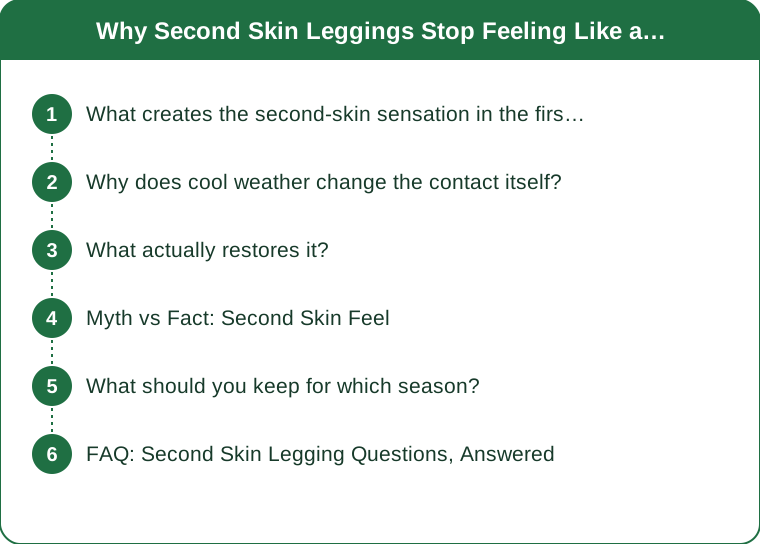
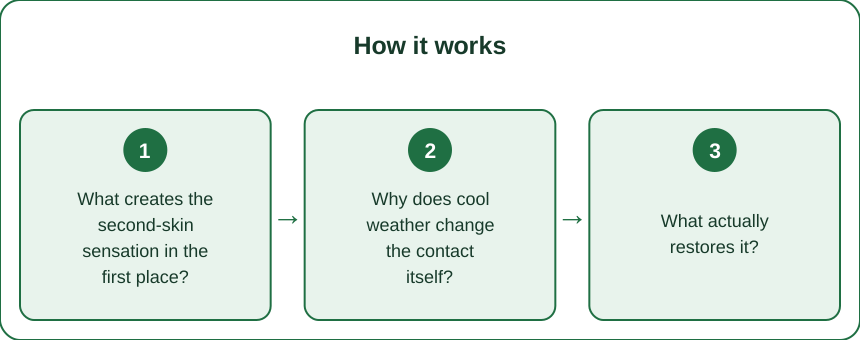
What creates the second-skin sensation in the first place?
Three conditions, all of which cool weather disrupts.
Temperature match. Your skin’s touch receptors register temperature differences more strongly than pressure. Fabric at the same temperature as your skin is close to invisible to them; fabric that is a few degrees cooler is not. This is the single biggest factor and the one nobody accounts for.
Continuous even contact. The sensation depends on the fabric touching everywhere with the same light pressure. Any gap, any concentrated point, and your brain flags it as an object rather than filtering it out.
Stable position. Sensory adaptation — your nervous system tuning out constant stimuli — only works when the stimulus is constant. Fabric that shifts against skin keeps re-triggering awareness.
In summer, all three are easy. The fabric is at room temperature which is near skin temperature, slightly damp skin improves contact, and the fabric warms in seconds. In autumn, cold fabric from a cold drawer takes three to five minutes to equalize, and for those minutes the leggings are extremely present.
Why does cool weather change the contact itself?
Because your skin changes, not just the fabric.
In cool conditions, peripheral blood vessels constrict and skin surface temperature drops. Slightly cooler, drier skin has a different friction profile than warm summer skin — it grips fabric differently and creates more micro-movement rather than the smooth settled contact you get in warm weather.
Autumn skin is also drier. Lower humidity and heated indoor air pull moisture out of the outer skin layer, and drier skin is more sensitive to texture. The same knit that read as smooth in August reads as slightly textured in October.
There is a static element too. Dry air and synthetic fabric produce more static cling, which is exactly the sensation of fabric being present rather than absent.
So you have three changes stacking: colder fabric, drier and cooler skin, and more static. Individually small, collectively enough to break the effect entirely for the first several minutes of wear.
What actually restores it?
Several things, most of them small and one of them slightly ridiculous but effective.
Warm the leggings before putting them on. Anything works — draping them over a radiator for two minutes, keeping them in a warm room rather than a cold drawer, or simply holding them for thirty seconds. This addresses the largest single factor.
Moisturize your legs. Dry autumn skin is more texture-sensitive and generates more static. An unscented lotion, absorbed fully before dressing, does more for the second-skin sensation than any fabric choice. This is the highest-return fix and the one people are most surprised by.
Address static directly. Skip fabric softener in the wash — it coats fibers and changes the hand feel — but a wool dryer ball or a brief airing helps, and moisturized skin generates less static anyway.
Move for two minutes before judging them. Body heat equalizes the fabric quickly once you are moving. The verdict you form in the first sixty seconds is about temperature, not about the leggings.
Do not size down to compensate. Tighter fabric is more present, not less. The sensation you want comes from even light contact, and increasing pressure moves away from it.

Myth vs Fact: Second Skin Feel
Myth: The second-skin feel is entirely about fabric quality. Fact: Fabric quality sets the ceiling, and the conditions determine whether you reach it. An excellent legging on cold dry skin in a cold room will feel worse than a mediocre one on warm moisturized skin in a warm room.
Myth: Thinner fabric feels more like a second skin. Fact: Up to a point. Extremely thin fabric telegraphs every surface it touches and equalizes temperature fast but also loses heat fast, which in cool weather means it stays close to ambient rather than to you. A mid-weight fabric often feels more invisible in autumn than a very light one.
Myth: The feeling fades because the leggings are wearing out. Fact: Seasonal change and genuine wear both reduce it, and they are distinguishable. If the sensation comes back once you are warm and moving, it is seasonal. If the fabric has visibly lost recovery, gone thin at the knees, or stopped springing back, that is wear.
Myth: Compression and second-skin feel are the same thing. Fact: They are different and often opposed. Compression is noticeable pressure by design; second-skin feel is the absence of noticeable pressure. A high-compression legging can be excellent and will never disappear the way a light one does.
Myth: You need to buy the autumn version. Fact: For most people, warming the fabric and moisturizing the skin restores it entirely. A heavier legging is a genuine cold-weather need, but it is a warmth purchase rather than a feel purchase.
What should you keep for which season?
Sorting this once saves a lot of disappointing mornings.
Keep in autumn rotation:
- Mid-weight knits, which hold your body temperature better and equalize faster
- Anything brushed or peached on the inside — that surface traps a thin layer of warm air against the skin, which is exactly the temperature-matching mechanism
- Higher-rise styles, since the waistband area is where cold contact is most noticeable
Move toward the back until spring:
- Very lightweight and highly perforated knits, which stay at ambient temperature
- Anything with mesh panels, which put cold air directly on skin
- Pairs you only ever loved in warm studios
The practical routine for a cool morning: moisturize, let it absorb for a minute, put on leggings that have been somewhere warm, and move around for two minutes before deciding anything. That sequence takes about three extra minutes and restores the sensation for nearly everyone.
And a care point for the months ahead: air dry rather than tumble dry. High heat degrades the elastane that makes the fabric conform closely, and losing that is the one change that genuinely does not come back.
FAQ: Second Skin Legging Questions, Answered
Why does it come back after ten minutes?
Because the fabric has reached your skin temperature and your nervous system has adapted to the constant stimulus. Both processes take a few minutes in cool conditions and are close to instant in warm ones. The leggings were never the variable.
Does moisturizing damage the fabric?
Fully absorbed lotion does not, and it is worth waiting the minute for it to absorb rather than dressing over damp skin. Heavy oils and anything greasy can transfer into the fabric over time and are worth avoiding right before wear. A light fragrance-free lotion is the safest choice.
Should I buy a fleece-lined pair instead?
For genuinely cold outdoor use, yes — that is a warmth need and no amount of technique substitutes for insulation. For indoor training and normal autumn days, the standard pair plus warm fabric and moisturized skin gets you back to the feel you liked, and fleece-lined leggings rarely deliver the second-skin sensation because the lining is a deliberately noticeable texture.
TL;DR:
- The second-skin sensation needs the fabric to match your skin temperature and stay in even contact
- Cold fabric, cooler drier skin, and static all break it for the first several minutes of wear
- Warm the leggings before dressing, moisturize with something unscented, and move for two minutes before judging
- Do not size down — tighter fabric is more present, not less
The pair that felt like nothing in July still does, about four minutes after you put them on. Everything before that is a temperature problem wearing a fabric problem’s clothes.
See It in Motion
Seen here: High Waist 8” Yoga Shorts — shop similar styles on bubblelime.com
Keep Reading
This article is for general informational and styling purposes only. Fit, sizing, and product availability may vary.